

Overview
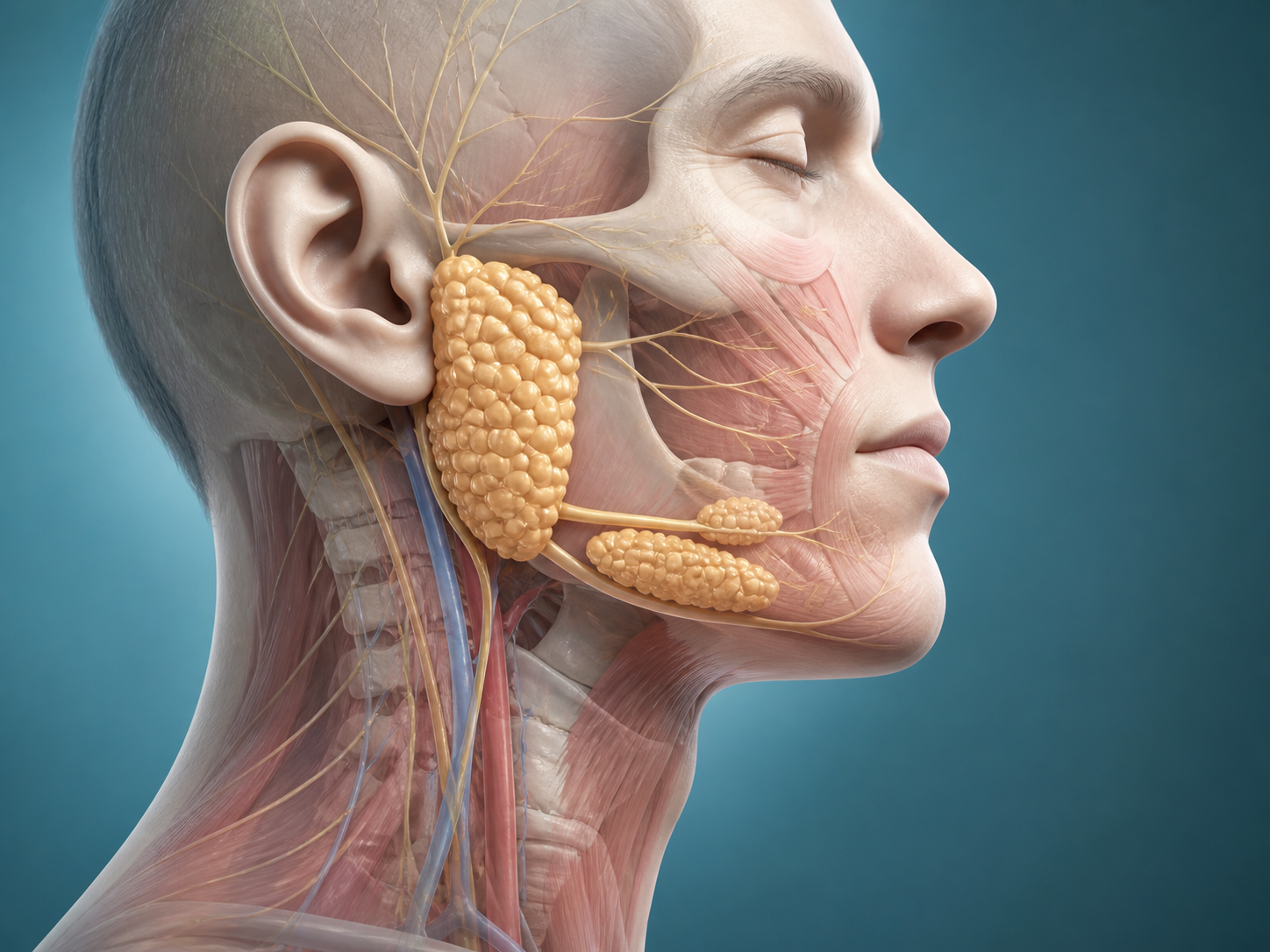
Salivary gland surgery is planned for conditions such as recurrent gland infections, stones, cysts, benign tumours, or other lesions. The goal is to treat the underlying problem while protecting the facial nerve, surrounding structures, and normal saliva function whenever possible.
Who May Benefit?
Persistent swelling, pain that increases during meals, recurrent infections, a palpable mass, or an imaging finding may require assessment by an experienced head and neck surgeon.
The Treatment Process
Ultrasound, imaging, needle sampling, and clinical examination may be used to understand the lesion. The operation is tailored to the gland and diagnosis, with meticulous dissection around important nerves and vessels.
Recovery
Temporary swelling, tenderness, altered sensation, or changes in saliva can occur. Follow-up focuses on wound healing, nerve function, pathology results, and the patient's return to normal eating and daily activities.
Important Note
A new or persistent salivary gland swelling should be examined rather than self-treated. The treatment plan depends on the exact diagnosis.